Tartaric Acid
Tartaric Acid
The amount of acid present in a wine can directly affect its color and flavor, and can serve to balance the sweeter or more astringent wine components. This balance is challenging as too much acid may make a wine tart or sharp, while too little may make a wine flat or flabby. Proper acidity in wine is important to making the wine stable, palatable, with a refreshing accompaniment to food. The proper acid level of a finished wine can vary based on the wines desired style, with sweeter wines requiring slightly higher levels of acidity to maintain proper balance with their sweeter components.
Tartaric acid concentrations in wine range normally from 1.5 to 4.0 g/L. This acid concentration should not be confused with total or titratable acidity of wines, which are often expressed as tartaric acid content as well. Although it is the tartaric acid that is the predominant acid present, up to 60% of the total acidity, others like malic, citric, and several volatile acids contribute significantly to total acidity.
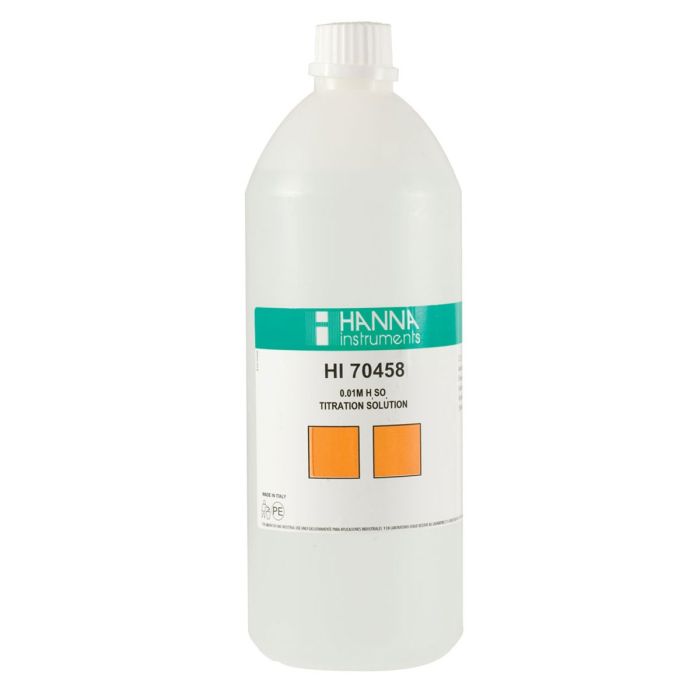
Hanna offers titration systems for measuring titratable acidity and a photometer for measuring tartaric acid.
Potentiometric titration of acidity can be done with an application specific minititrator that simplifies the measurement for the winemaker. Titrators are also available that can be programmed with multiple methods including one specific for wine that can measure sulfur dioxide, reducing sugars, and YAN.
Also available is the photometric chemical method. In this method two reagents are used in determining the concentration of tartaric acid less than 5.0 g/L (ppt). When both reagents are added to a sample containing tartaric acid, the sample will turn an orange-red hue; the greater the concentration, the deeper the color. The associated color change is then calorimetrically analyzed according to the Beer-Lambert Law.
Showing all 14 results