
 GST and Shipping charges are extra
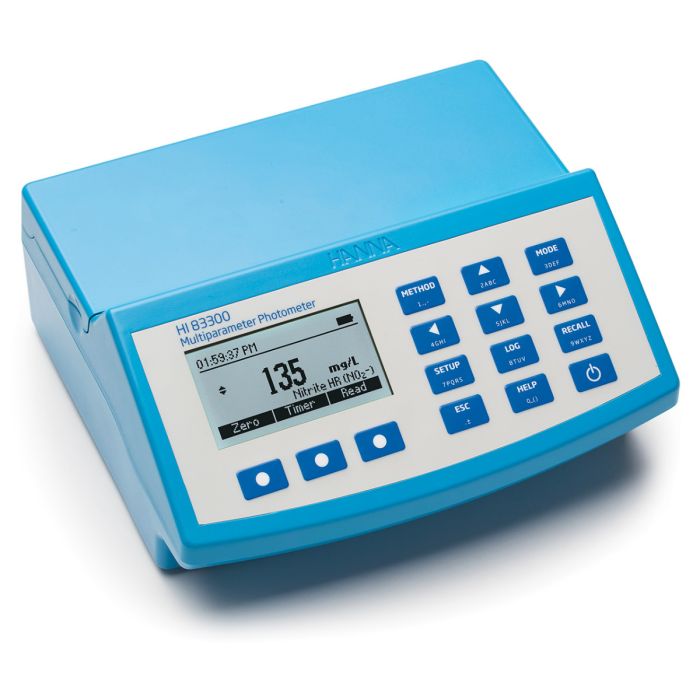
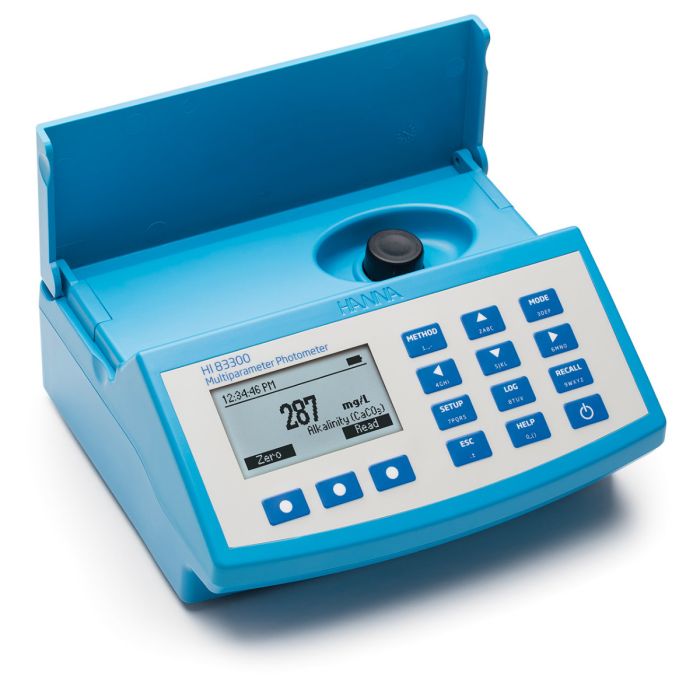
HI83300 is a compact, multiparameter photometer for use in the lab or in the field. The meter is one of the most advanced photometers available with a innovative optical design that utilizes a reference detector and focusing lens to eliminate errors from changes in the light source and from imperfections in the glass cuvette. This meter has 60 different programmed methods measuring 37 key water quality parameters and also offers an absorbance measurement mode for performance verification and for users that would like to develop their own concentration versus absorbance curves.
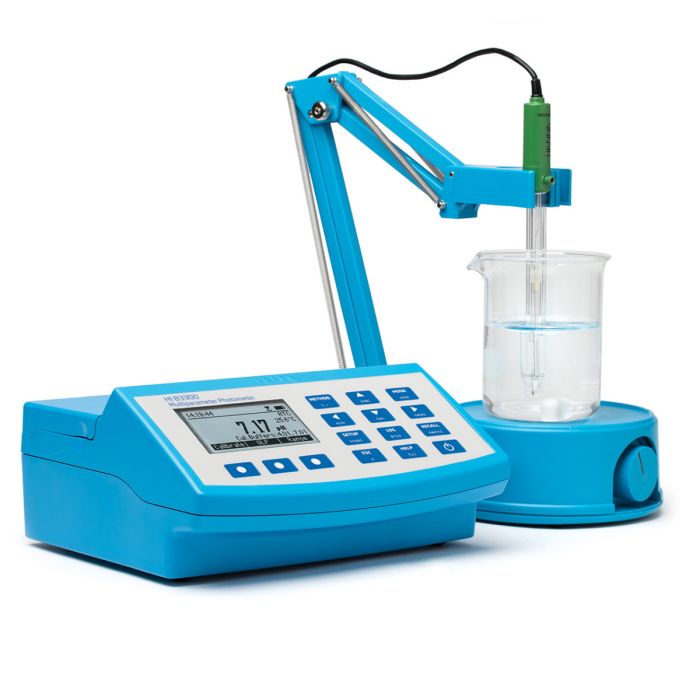
To save valuable laboratory benchtop space, the HI83300 doubles as a professional pH meter with its digital pH/temperature electrode input. Now one meter can be used for both photometric and pH measurements.
Unparalleled performance from a benchtop photometer
Save valuable bench space with one meter that works both as a photometer and as a laboratory pH meter
Allows performance verification using CAL Check standards
From aluminum to zinc, the HI83300 benchtop photometer measures 37 different key water quality parameters using 60 different methods. This photometer features an innovative optical system that uses LEDs, narrow band interference filters, focusing lens and both a silicon photodetector for absorbance measurement and a reference detector to maintain a consistent light source ensures accurate and repeatable photometric readings every time.
A digital pH electrode input allows the user to measure pH by a traditional glass electrode. The digital pH electrode has a built in microchip within the probe that stores all of the calibration information. Having the calibration information stored in the probe allows for hot swapping of pH electrodes without having to recalibrate. All pH measurements are automatically compensated for temperature variations with a built in thermistor located in the tip of the sensing bulb for fast and accurate temperature measurement.
The HI83300 offers an absorbance measuring mode that allows for CAL Check standards to be used to validate the performance of the system. The absorbance mode allows the user to select one of the five wavelengths of light (420 nm, 466 nm, 525 nm, 575 nm, and 610 nm) to measure and plot their own concentration versus absorbance mode. This is useful for users with their own chemical method and for educators to teach the concept of absorbance by using the Beer-Lambert Law.
Two USB ports are provided for transferring data to a flash drive or computer and to use as a power source for the meter. For added convenience and portability the meter can also operate on an internal 3.7 VDC Lithium-polymer rechargeable battery.
Backlit 128 x 64 Pixel Graphic LCD Display
Built-in Reaction Timer for Photometric Measurements
Absorbance mode
Units of Measure
Result Conversion
Cuvette Cover
Digital pH Electrode Input
Data Logging
Connectivity
Battery Status Indicator
Error Messages
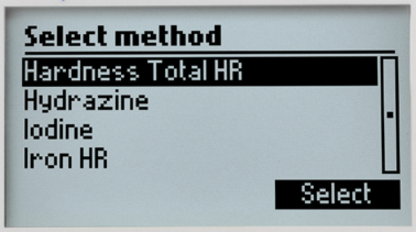
Method Selection
Users can easily select any one of the 60 measurement methods via the dedicated METHOD button.
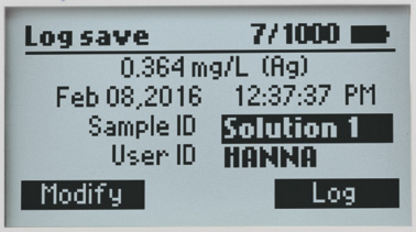
Data Logging
Up to 1000 measurement readings can be logged with user and sample ID and recalled for future use.
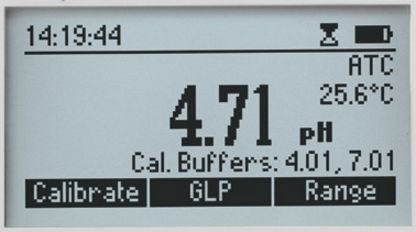
pH Measurement Mode
Selecting the pH measurement mode allows for the photometer to be used as a professional pH meter with many features including temperature compensated measurements, automatic two point calibration, and GLP.
HI83300 is designed with an innovative optical system that incorporates a beam splitter so that light can be used for absorbance readings and for a reference detector. The reference detector monitors the intensity of light and modulates when there is drift due to power fluctuation or the heating of the optical components. Each part has an important role in providing unparalleled performance from a photometer.
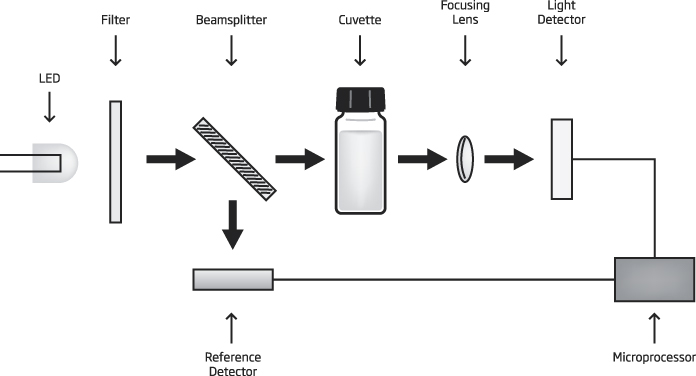
An LED light source offers superior performance as compared to a tungsten lamp. LEDs have a much higher luminous efficiency, providing more light while using less power. They also produce very little heat, which could otherwise affect the optical components an electronic stability. LEDs are available in a wide array of wavelengths, whereas tungsten lamps are supposed to be white light (all wavelengths of visible light) but actually have a poor blue/violet light output.
The narrow band interference filter not only ensure greater wavelength accuracy (±1 nm) but are extremely efficient. The filters used allow up to 95% of the light from the LED to be transmitted as compared to other filters that are only 75% efficient. The higher efficiency allows for a brighter, stronger light source. The end result is higher measurement stability and less wavelength error.
A beam splitter is used as part of the internal reference system of the HI83300 photometer. The reference detector compensates for any drift due to power fluctuations or ambient temperature changes. Now you can rely on a stable source of light between your blank (zero) measurement and sample measurement.
The sample cell of the HI83300 fits a round, glass cuvette with a 25 mm path length. Along with the advanced optical components, the larger size of the cuvette greatly reduces errors in rotation from the indexing mark of the cuvettes. The relatively long path length of the sample cuvette allows the light to pass through more of the sample solution, ensuring accurate measurements even in low absorbance samples.
Adding a focusing lens to the optical path allows for the collection of all of the light that exits the cuvette and focusing the light on the silicon photo detector. This novel approach to photometric measurements cancels the errors from imperfections and scratches present in the glass cuvette eliminating the need to index the cuvette.
| SKU | HI83300-01 |
| Name | Multiparameter Benchtop Photometer and pH meter – HI83300 |
| pH Range | Photometer: 6.5 to 8.5 pH pH electrode: -2.00 to 16.00 pH |
| pH Resolution | Photometer: 0.1 pH pH electrode: 0.1 pH |
| pH Accuracy | Photometer: ±0.1 pH pH electrode: ±0.01 pH |
| pH Calibration | Automatic one or two point calibration with one set of standard buffers available (4.01, 6.86, 7.01, 9.18, 10.01) |
| pH Temperature Compensation | Automatic (-5.0 to 100.0 ℃; 23.0 to 212.0 °F); limits reduced based on the pH electrode used |
| pH CAL Check (electrode diagnostics) | clean electrode and check buffer/check probe displayed during calibration |
| pH Method | Photometer: phenol red |
| pH-mV Range | ±1000 mV |
| pH-mV Resolution | 0.1 mV |
| pH-mV Accuracy | ±0.2 mV |
| Dissolved Oxygen Range | 0.0 to 10.0 mg/L (as O2) |
| Dissolved Oxygen Resolution | 0.1 mg/L |
| Dissolved Oxygen Accuracy | ±0.4 mg/L ±3% of reading |
| Dissolved Oxygen Measurement Method | Adaptation of the Standard Methods for the Examination of Water and Wastewater, 18th edition, Azide modified Winkler method |
| Absorbance Range | 0.000 to 4.000 Abs |
| Absorbance Resolution | 0.001 Abs |
| Absorbance Accuracy | ±0.003Abs @ 1.000 Abs |
| Alkalinity Range | Freshwater: 0 to 500 mg/L (as CaCO3) Seawater: 0 to 500 mg/L (as CaCO3) |
| Alkalinity Resolution | 1 mg/L |
| Alkalinity Accuracy | ±5 mg/L ±5% of reading |
| Alkalinity Method | Colorimetric method |
| Aluminum Range | 0.00 to 1.00 mg/L (as Al3+) |
| Aluminum Resolution | 0.01 mg/L |
| Aluminum Accuracy | ±0.04 mg/L ±4% of reading |
| Aluminum Method | Adaptation of the aluminon method |
| Ammonia Range | Low Range: 0.00 to 3.00 mg/L (as NH3-N) Medium Range: 0.00 to 10.00 mg/L (as NH3-N) High Range: 0.0 to 100.0 mg/L (as NH3-N) |
| Ammonia Resolution | 0.01 mg/L; 0.1 mg/L |
| Ammonia Accuracy | Low Range: ±0.04 mg/L ±4% of reading Medium Range: ±0.05 mg/L ±5% of reading High range: ±0.5 mg/L ±5% of reading at 25 °C |
| Ammonia Method | Adaptation of the ASTM Manual of Water and Environmental Technology, D1426-92, Nessler method |
| Anionic Surfactants Range | 0.00 to 3.50 mg/L (as SDBS) |
| Anionic Surfactants Resolution | 0.01 mg/L |
| Anionic Surfactants Accuracy | ±0.04 mg/L ±3% of reading |
| Anionic Surfactants Method | Adaptation of the USEPA method 425.1 and Standard Methods for the Examination of Water and Wastewater, 20th edition, 5540C, Anionic Surfactants as MBAS. |
| Bromine Range | 0.00 to 8.00 mg/L (as Br2) |
| Bromine Resolution | 0.01 mg/L |
| Bromine Accuracy | ±0.08 mg/L ±3% of reading |
| Bromine Method | Adaptation of the Standard Methods for the Examination of Water and Wastewater, 18th edition, DPD method. |
| Calcium Range | Freshwater: 0 to 400 mg/L (as Ca2+) Seawater: 200 to 600 mg/L (as Ca2+) |
| Calcium Resolution | 1 mg/L |
| Calcium Accuracy | Freshwater: ±10 mg/L ±5% of reading Seawater: ±6% of reading |
| Calcium Method | Freshwater: Adaptation of the Oxalate method Seawater: Adaptation of the Zincon method |
| Chloride Range | 0.0 to 20.0 mg/L (as Cl⁻) |
| Chloride Resolution | 0.1 mg/L |
| Chloride Accuracy | ±0.5 mg/L ±6% of reading at 25 °C |
| Chlorine Dioxide Range | 0.00 to 2.00 mg/L (as ClO2) |
| Chlorine Dioxide Resolution | 0.01 mg/L |
| Chlorine Dioxide Accuracy | ±0.10 mg/L ±5% of reading |
| Chlorine Dioxide Method | Adaptation of the Chlorophenol Red method. |
| Free Chlorine Range | 0.00 to 5.00 mg/L (as Cl2) Ultra Low Range: 0.000 to 0.500 mg/L (as Cl2) |
| Free Chlorine Resolution | 0.01 mg/L Ultra Low Range: 0.001 mg/L |
| Free Chlorine Accuracy | ±0.03 mg/L ±3% of reading Ultra Low Range: ±0.020 mg/L ±3% of reading |
| Total Chlorine Range | 0.00 to 5.00 mg/L (as Cl2) Ultra Low Range: 0.000 to 0.500 mg/L (as Cl2) Ultra High Range: 0 to 500 mg/L (as Cl2) |
| Total Chlorine Resolution | 0.01 mg/L Ultra Low Range: 0.001 mg/L Ultra High Range:1 mg/L |
| Total Chlorine Accuracy | ±0.03 mg/L ±3% of reading Ultra Low Range: ±0.020 mg/L ±3% of reading Ultra High Range: ±3 mg/L ±3% of reading |
| Chlorine Method | Adaptation of the EPA 330.5 DPD method Free Chlorine (ULR) & Total Chlorine (UHR): Adaptation of the Standard Methods for Examination of Water and Wastewater, 20th edition, 4500-Cl |
| Chromium, Hexavalent Range | Low Range: 0 to 300 µg/L (as Cr6+) High Range: 0 to 1000 µg/L (as Cr6+) |
| Chromium, Hexavalent Resolution | 1 µg/L |
| Chromium, Hexavalent Accuracy | Low Range: ±1 µg/L ±4% of reading High Range: ±5 µg/L ±4% of reading |
| Chromium, Hexavalent Method | Adaptation of the ASTM Manual of Water and Environmental Technology, D1687-92, Diphenylcarbohydrazide method. |
| Color, Water Range | 0 to 500 PCU (Platinum Cobalt Units) |
| Color, Water Resolution | 1 PCU |
| Color, Water Accuracy | ±10 PCU ±5% of reading |
| Color, Water Method | Adaptation of the Standard Methods for the Examination of Water and Wastewater, 18th edition, Colorimetric Platinum Cobalt method. |
| Copper Range | Low Range: 0.000 to 1.500 mg/L (as Cu2+) High range: 0.00 to 5.00 mg/L (as Cu2+) |
| Copper Resolution | 0.001 mg/L; 0.01 mg/L |
| Copper Accuracy | Low Range: ±0.01 mg/L ±5% of reading High Range ±0.02 mg/L ±4% of reading |
| Copper Method | Adaptation of the EPA bicinchoninate method |
| Cyanuric Acid Range | 0 to 80 mg/L (as CYA) |
| Cyanuric Acid Resolution | 1 mg/L |
| Cyanuric Acid Accuracy | ±1 mg/L ±15% of reading |
| Cyanuric Acid Method | Adaptation of the turbidimetric method |
| Fluoride Range | Low Range: 0.00 to 2.00 mg/L (as F–) High range: 0.0 to 20.0 mg/L (as F–) |
| Fluoride Resolution | 0.01 mg/L; 0.1 mg/L |
| Fluoride Accuracy | Low Range: ±0.03 mg/L ±3% of reading High Range: ±0.5 mg/L ±3% of reading |
| Fluoride Method | Adaptation of the Standard Methods for the Examination of Water and Wastewater, 18th edition, SPADNS method |
| Hardness, Total Range | Low Range: 0 to 250 mg/L (as CaCO3) Medium Range: 200 to 500 mg/L (as CaCO3) High Range: 400 to 750 mg/L (as CaCO3) |
| Hardness, Total Resolution | 1 mg/L |
| Hardness, Total Accuracy | Low Range: ±5 mg/L ±4% of reading Medium Range: ±7 mg/L ±3% of reading High Range: ±10 mg/L ±2% of reading |
| Hardness, Total Method | Adaptation of the EPA recommended method 130.1 |
| Hardness, Calcium Range | 0.00 to 2.70 mg/L (as CaCO3) |
| Hardness, Calcium Resolution | 0.01 mg/L |
| Hardness, Calcium Accuracy | ±0.11 mg/L ±5% of reading |
| Hardness, Calcium Method | Adaptation of the Standard Methods for the Examination of Water and Wastewater, 18th edition, Calmagite method |
| Hardness, Magnesium Range | 0.00 to 2.00 mg/L (as CaCO3) |
| Hardness, Magnesium Resolution | 0.01 mg/L |
| Hardness, Magnesium Accuracy | ±0.11 mg/L ±5% of reading |
| Hardness, Magnesium Method | Adaptation of the Standard Methods for the Examination of Water and Wastewater, 18th edition, EDTA Colorimetric method |
| Hydrazine Range | 0 to 400 µg/L (as N2H4) |
| Hydrazine Resolution | 1 µg/L |
| Hydrazine Accuracy | ±4% of full scale reading |
| Hydrazine Method | Adaptation of the ASTM Manual of Water and Environmental Technology, method D1385-88, p-Dimethylaminobenzaldehyde method |
| Iodine Range | 0.0 to 12.5 mg/L (as I2) |
| Iodine Resolution | 0.1 mg/L |
| Iodine Accuracy | ±0.1 mg/L ±5% of reading |
| Iodine Method | Adaptation of the Standard Methods for the Examination of Water and Wastewater, 18th edition, DPD method |
| Iron Range | Low Range: 0.000 to 1.600 mg/L (as Fe) High Range: 0.00 to 5.00 mg/L (as Fe) |
| Iron Resolution | 0.001 mg/L; 0.01 mg/L |
| Iron Accuracy | Low Range: ±0.01 mg/L ±8% of reading High Range: ±0.04 mg/L ±2% of reading |
| Iron Method | Low Range: Adaptation of the TPTZ Method Adaptation of Standard Methods for the Examination of Water and Wastewater, 3500-Fe B., Phenanthroline Method |
| Magnesium Range | 0 to 150 mg/L (as Mg2+) |
| Magnesium Resolution | 1 mg/L |
| Magnesium Accuracy | ±5 mg/L ±3% of reading |
| Magnesium Method | Adaptation of the Calmagite method |
| Manganese Range | Low Range: 0 to 300 µg/L (as Mn) High Range: 0.0 to 20.0 (as Mn) |
| Manganese Resolution | 1 µg/L; 0.1 mg/L |
| Manganese Accuracy | Low Range: ±10 µg/L ±3% of reading High Range: ±0.2 mg/L ±3% of reading |
| Manganese Method | Low Range: Adaptation of the PAN Method High Range: Adaptation of the Standard Methods for the Examination of Water and Wastewater, 18th edition, Periodate method |
| Molybdenum Range | 0.0 to 40.0 mg/L (as Mo6+) |
| Molybdenum Resolution | 0.1 mg/L |
| Molybdenum Accuracy | ±0.3 mg/L ±5% of reading |
| Molybdenum Method | Adaptation of the mercaptoacetic acid method |
| Nickel Range | Low Range: 0.000 to 1.000 mg/L (as Ni) High Range: 0.00 to 7.00 g/L (as Ni) |
| Nickel Resolution | 0.001 mg/L; 0.01 g/L |
| Nickel Accuracy | Low range: ±0.010 mg/L ±7% of reading High Range: ±0.07 g/L ±4% of reading |
| Nickel Method | Low Range: Adaptation of the PAN method High Range: Adaptation of the photometric method |
| Nitrate Range | 0.0 to 30.0 mg/L (as NO3–– N) |
| Nitrate Resolution | 0.1 mg/L |
| Nitrate Accuracy | ±0.5 mg/L ±10% of reading |
| Nitrate Method | Adaptation of the cadmium reduction method |
| Nitrite Range | Freshwater Low Range: 0 to 600 µg/L (as NO2–-N) High Range: 0 to 150 mg/L (as NO2–) Seawater Ultra Low Range: 0 to 200 µg/L (as NO2–-N) |
| Nitrite Resolution | Freshwater: 1 µg/L; 1 mg/L Seawater: 1 µg/L |
| Nitrite Accuracy | Freshwater Low Range: ±20 µg/L ±4% of reading High Range: ±4 mg/L ±4% of reading Seawater ±10 µg/L ±4% of reading |
| Nitrite Method | Adaptation of the EPA Diazotization method 354.1 |
| Oxygen, Scavenger Range | 0 to 1000 µg/L (as DEHA) 0.00 to 1.50 mg/L (as Carbohydrazide) 0.00 to 2.50 mg/L (as Hydroquinone) 0.00 to 4.50 mg/L (as ISO-ascorbic acid) |
| Oxygen, Scavenger Resolution | 1 µg/L (DEHA); 0.01 mg/L |
| Oxygen, Scavenger Accuracy | ±5 µg/L ±5% of reading (DEHA) |
| Oxygen, Scavenger Method | Adaptation of the iron reduction method |
| Ozone Range | 0.00 to 2.00 mg/L (as O3) |
| Ozone Resolution | 0.01 mg/L |
| Ozone Accuracy | ±0.02 mg/L ±3% of reading |
| Ozone Method | Colorimetric DPD Method |
| Phosphate Range | Freshwater Low Range: 0.00 to 2.50 mg/L (as PO43-) High range: 0.0 to 30.0 mg/L (as PO43-) Seawater Ultra Low Range: 0 to 200 µg/L (as P) |
| Phosphate Resolution | Freshwater: 0.01 mg/L; 0.1 mg/L Seawater: 1 µg/L |
| Phosphate Accuracy | Freshwater Low Range: ±0.04 mg/L ±4% of reading High Range: ±1 mg/L ±4% of reading Seawater Ultra Low Range: ±5 µg/L ±5% of reading |
| Phosphate Method | Freshwater Low Range: Adaptation of the Ascorbic Acid method Freshwater High Range and Seawater Ultra Low Range: Adaptation of the Standard Methods for the Examination of Water and Wastewater, 18th edition, Amino Acid method |
| Potassium Range | 0.0 to 20.0 mg/L (as K) |
| Potassium Resolution | 0.1 mg/L |
| Potassium Accuracy | ±3.0 mg/L ±7% of reading |
| Potassium Method | Adaptation of the Turbidimetric Tetraphenylborate method |
| Silica Range | Low Range: 0.00 to 2.00 mg/L (as SiO2) High Range: 0 to 200 mg/L (as SiO2) |
| Silica Resolution | 0.01 mg/L; 1 mg/L |
| Silica Accuracy | Low Range: ±0.03 mg/L ±3% of reading High Range: ±1 mg/L ±5% of reading |
| Silica Method | Low Range: Adaptation of the ASTM Manual of Water and Environmental Technology, D859, Heteropoly Molybdenum Blue method High Range: Adaptation of the USEPA Method 370.1 and Standard Method 4500-SiO2 |
| Silver Range | 0.000 to 1.000 mg/L (as Ag) |
| Silver Resolution | 0.001 mg/L |
| Silver Accuracy | ±0.020 mg/L ±5% of reading |
| Silver Method | Adaptation of the PAN method |
| Sulfate Range | 0 to 150 mg/L (as SO42-) |
| Sulfate Resolution | 1 mg/L |
| Sulfate Accuracy | ±5 mg/L ±3% of reading |
| Sulfate Method | Turbidimetric – Sulfate is precipitated with barium chloride crystals |
| Zinc Range | 0.00 to 3.00 mg/L (as Zn) |
| Zinc Resolution | 0.01 mg/L |
| Zinc Accuracy | ±0.03 mg/L ±3% of reading |
| Zinc Method | Adaptation of the Standard Methods for the Examination of Water and Wastewater, 18th edition, Zincon method |
| Input Channels | 1 pH electrode input and 5 photometer wavelengths |
| pH Electrode | digital pH electrode (not included) |
| Photometer/Colorimeter Light Source | 5 LEDs with 420 nm, 466 nm, 525 nm, 575 nm, and 610 nm narrow band interference filters |
| Photometer/Colorimeter Light Detector | silicon photodetector |
| Bandpass Filter Bandwidth | 8 nm |
| Bandpass Filter Wavelength Accuracy | ±1 nm |
| Cuvette Type | round, 24.6 mm |
| Number of Methods | 128 max. |
| GLP | calibration data for connected pH electrode |
| Display | 128 x 64 pixel LCD with backlight |
| Logging Type | log on demand with user name and sample ID optional input |
| Logging Memory | 1000 readings |
| Connectivity | USB-A host for flash drive; micro-USB-B for power and computer connectivity |
| Power Supply | 5 VDC USB 2.0 power adapter with USB-A to micro-USB-B cable (included) |
| Battery Type/Life | 3.7 VDC Li-polymer rechargeable battery / >500 photometric measurements or 50 hours of continuous pH measurement |
| Environment | 0 to 50.0 ℃ (32 to 122.0 °F); 0 to 95% RH, non-condensing |
| Weight | 1.0 kg (2.2 lbs.) |
| Dimensions | 206 x 177 x 97 mm (8.1 x 7.0 x 3.8”) |
HI83300 is supplied with sample cuvettes and caps (4 ea.), cloth for wiping cuvettes, USB to micro USB cable connector, power adapter and instruction manual.
<!--  -->Ships within 24 hours (business days)
<!-- -->Ships within 24 hours (business days)
<!-- -->Ships within 24 hours (business days)
<!-- -->Ships within 24 hours (business days)
<!-- -->Ships within 24 hours (business days)


Reviews
There are no reviews yet.